8 things that I always bring to playgroup
As the manager of the Behavior department at a shelter, facilitating dog-to-dog interactions is part of my daily life. Observing these interactions is part of our routine behavior assessment protocol. Many adopters already have resident dog(s) and we require an onsite introduction prior to adoption. I also host playgroups for shelter dog enrichment.
And by playgroups I mean… something very specific.
I cannot emphasize enough how much I DO NOT MEAN: Put 12 dogs in a yard together and see what happens.
The “Dogs Playing for Life” model is extremely problematic, and unfortunately just as common. The gist is that all dogs benefit from playgroups, large groups are encouraged, and there is heavy reliance on corrective measures like spray bottles, air horns, and even hoses.
To a certain extent, I get it. Shelter staff and volunteers are doing the best they can with the information they have. Large playgroups maximize the amount of dogs who can receive activity in the little time staff/volunteers have available. To the untrained eye, it definitely can look like dogs are benefitting from these groups. Adopters love to see dogs being around other dogs. It appeals to our outdated idea that dogs are pack animals and that being around other dogs will cure all.
But the harm is real. In my private practice, many dogs who were previously “playgroup rockstars” in DPFL-loving shelters would come to me with intense behavior problems that were likely created/exacerbated by those playgroups. If our intake team is considering transferring a dog in from a shelter that uses this philosophy, we have to read carefully between the lines of their behavior notes.
So what should a healthy playgroup look like? I have some strong opinions (as I always do). Here’s what’s in my tool bag.
Two dogs, and two dogs only
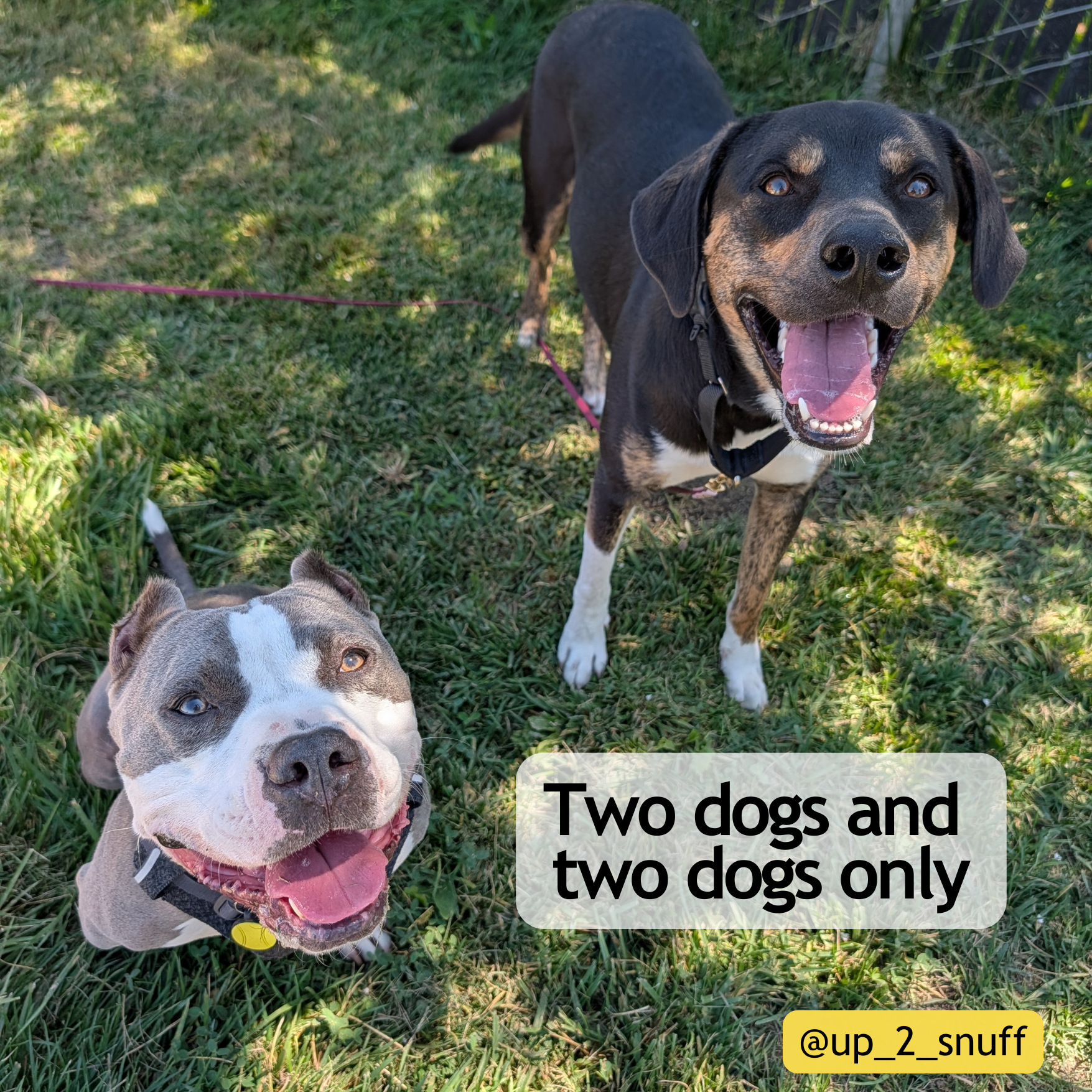
Large groups are a recipe for disaster. They prioritize human convenience over benefit to the dogs. Dogs are not pack animals, and there is nothing magical or healing about being part of a group like this. Healthy play is most likely to emerge in pairs. This is also safest to manage and allows handlers to provide individualized attention to body language and behavior.
Large groups almost always rely on flooding – behavior suppression caused by overwhelming and unavoidable exposure to stimuli – to provide the illusion of calm. Aggression is a risky and expensive behavior. If you’re uncomfortable around other dogs but you’re surrounded by them, trying to blend into the background and not cause a scene is your safest bet. This might look like a dog who is relaxed, coexisting, or even enjoying themselves if that’s what you want to see. Meanwhile, that dog is likely learning that being around other dogs is overwhelming and unsafe, so when they encounter dogs in other scenarios later, their response may be a much stronger “get the hell away from me”.
If your argument is that you don’t have enough time to take dogs out in pairs, I’d argue that you also don’t have time to provide adequate follow-up support for adopters and dogs who are struggling with the fallout of your practices.
A slow introduction
A while back, someone tagged me in a comment of a shelter worker’s video that felt like my personal nightmare. I can’t seem to find it now (maybe it was a bad dream). Two (maybe more?) dogs were separated by a chain link fence. The person holding the camera was spraying one of the dogs with a hose and telling them to “get back” in order to “teach” them to make space. Then they would open the gate and release the dogs to interact. Not only does this feel cruel and lazy, it’s absolutely not teaching anything meaningful besides “people do weird shit and maybe it’s because there’s another dog nearby, so time to crank out the cortisol”.
The introduction is one of the most important parts of the entire playgroup. It’s often where conflict will break out. It’s also the most relevant learning experience. It’s the scenario that is most likely to be repeated in that dog’s life post-adoption: every time they pass a dog on a walk, every time they accidentally go nose to nose with an off-leash dog, every time they meet the dog of a friend or family member, they will be drawing from previous experiences that their time in playgroup may help or seriously hinder. I protect the introduction at all costs.
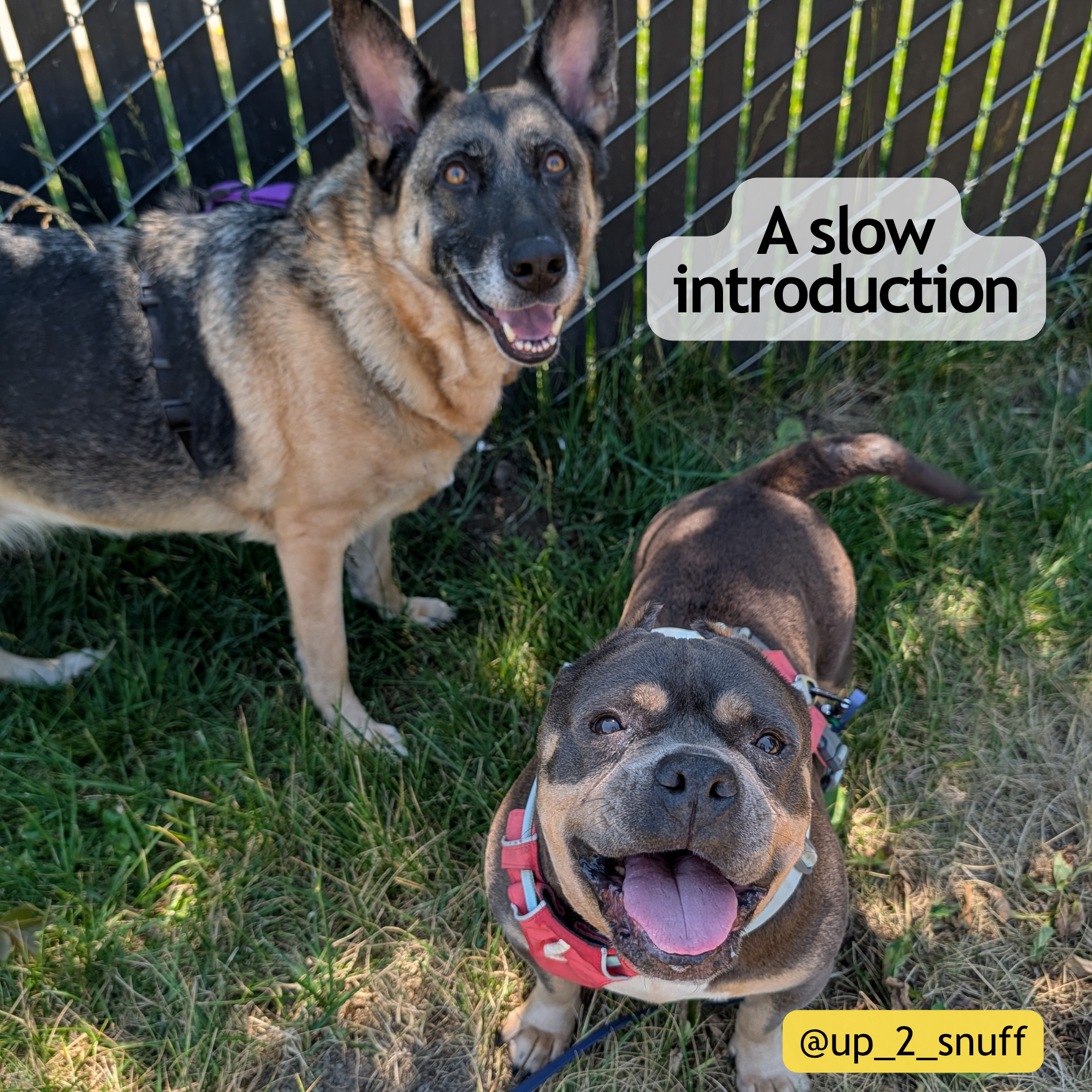
There is always room for adjustment for the needs of the individual dog, but the bones of what I typically do are like this: The dogs begin with completely separate sniffy walks. We don’t want to build the expectation that outside time = anticipation of meeting a dog. We assess the dog’s baseline; are they able to engage with their handler, eat food, and show comfortable body language? If not, playgroup may not be the right activity for them at this time. If signs are good, move into a parallel walk at a distance where the dogs can notice each other but continue previous signs of subthreshold behavior (eat, interact with handler/environment, etc). After a few minutes of parallel, if both (must be both) dogs show positive interest in each other, move into a greeting. Ideally there is mutual inguinal sniffing but a nose-to-nose might happen. Handlers count out loud to three, and then cheerlead the dogs apart for a break. Back into some parallel walking, then greeting again, repeating as needed until dogs are able to walk in parallel or show signs of play. If all is well, we move into a yard and proceed with play! But there are dozens of moments before that where any handler can say “nope, let’s call it”.
2+ skilled handlers
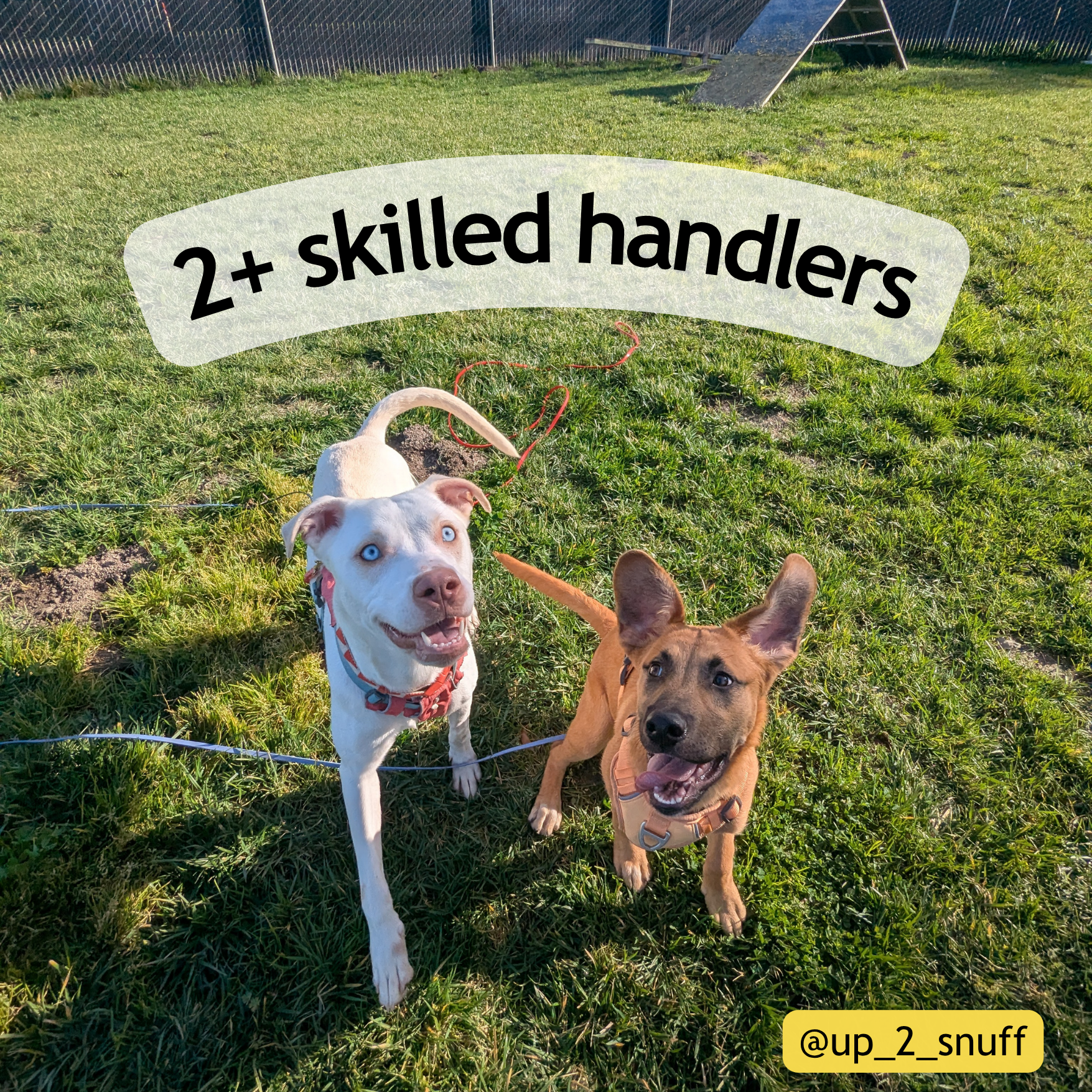
Playtime may sound like fun and games but it’s not an entry-level activity. At minimum I require a 1:1 ratio of handlers to dogs. Those handlers should be skilled in reading body language, understanding healthy play, using positive reinforcement, communicating with their fellow handlers, and breaking up physical conflict with least-intrusive methods. We narrate aloud the body language and behavior that we see, and anyone is allowed to say “let’s call it” at any point. I invite other staff/volunteers to join as observers, but this does not suffice as training; they’ll need to complete my play webinars for that.
Harnesses and leashes/draglines
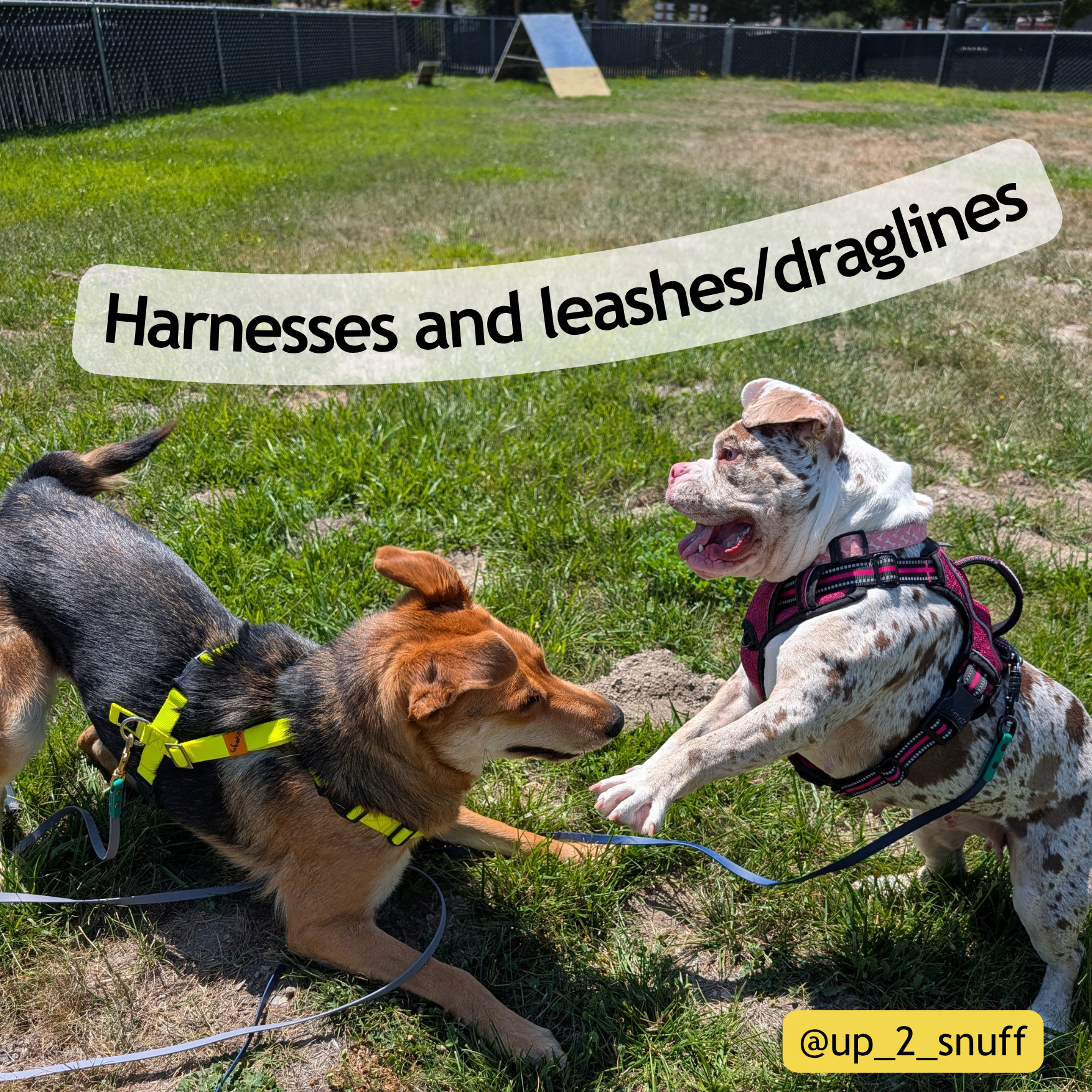
Unless the dog is very averse to wearing more than a martingale collar, all dogs are outfitted with well-fitted harnesses before playgroup. We conduct introductions on long lines (10-12ft) so the option to move away from the dog is preserved. Then, when we move into play, we usually just drop those leashes and let them drag. We may switch to drag lines (leashes without handles) for established play pairs. But it’s rare that anyone is ever leash-less.
Keeping a line attached to a harness interferes minimally with the dogs’ play/movement but provides an important safety net if you ever need to catch, grab, or remove a dog using physical contact. If arousal is too high, conflict is brewing, dogs are triggered by something outside of the yard, someone unintentionally opens a gate, etc, it’s important peace of mind to have this equipment in place. Slip leads are inappropriate here as they can cause serious discomfort or injury.
Food
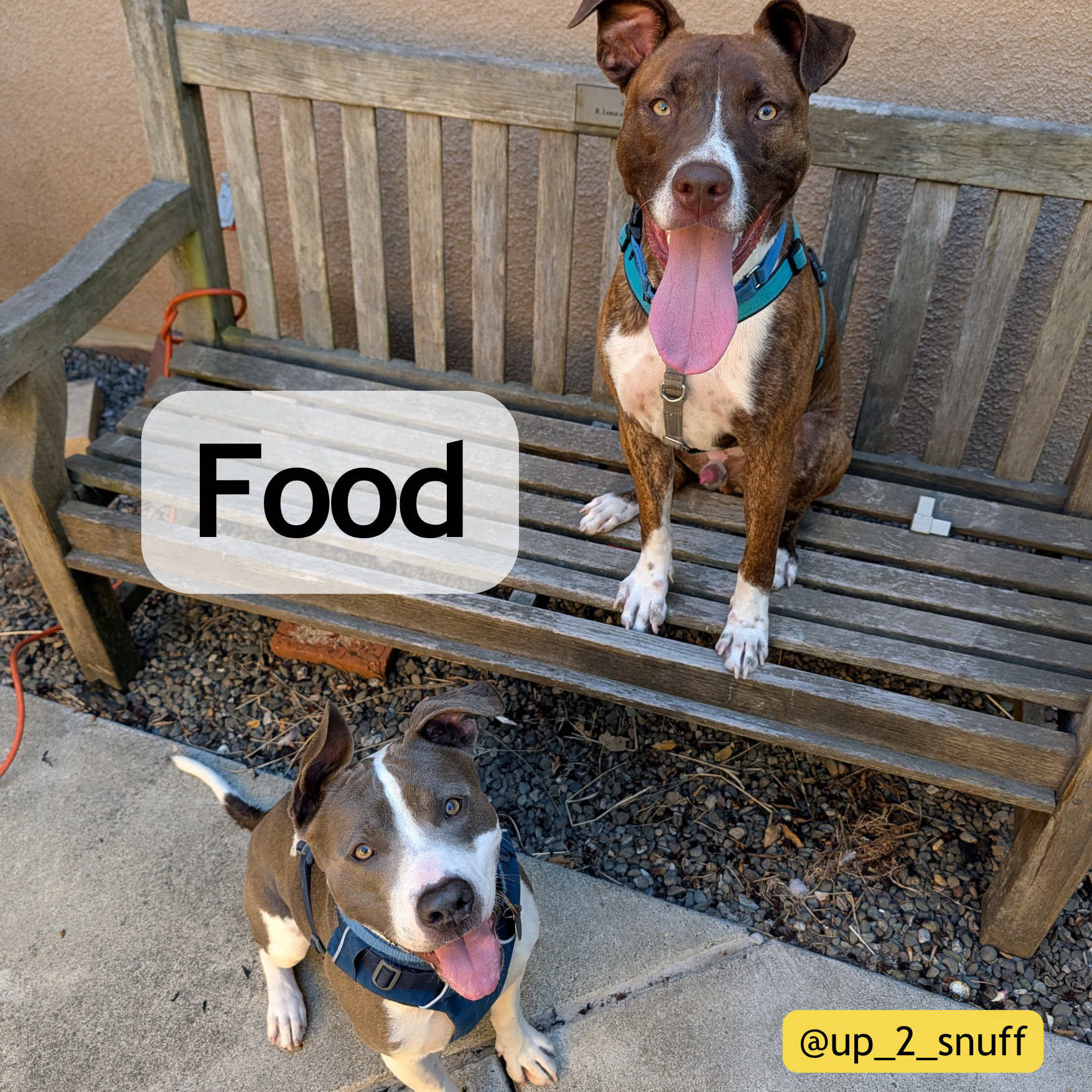
Worrying about dogs guarding treats or treat bags is appropriate if those behaviors have been observed before. But most of the time, this worry is unfounded, and the benefit of using food to facilitate healthy interactions outweighs the risk.
Food is a safety tool. It allows us to capture desired behaviors, condition positive emotional responses, facilitate breaks, and lower arousal levels. A dog’s ability to eat food can also provide information on their [fear, frustration, arousal] threshold. Of course we should be thoughtful about how and where we are delivering it to reduce the risk of conflict – ideally the dogs are fed by their respective handlers, or with hands wide apart, or tossed in separate directions – but aforementioned skilled handlers should be able to navigate this no problem.
Ample breaks and thoughtful arousal regulation
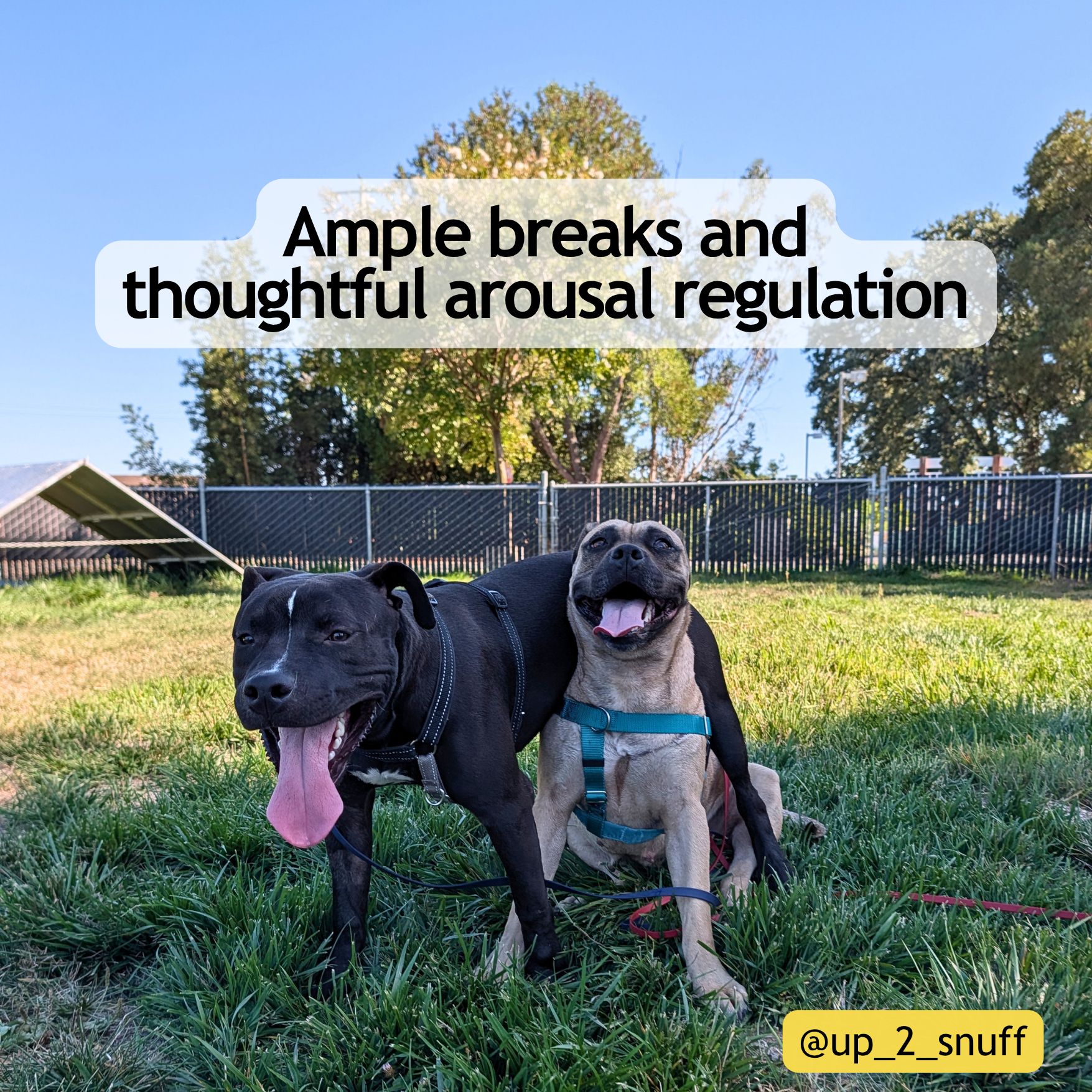
Playgroup is not a free-for-all. We do not ascribe to the outdated idea of letting dogs “work it out”. Our role as playgroup facilitators is to make sure everyone is safe, having a good time, and rehearsing appropriate behaviors. Encouraging dogs to take breaks is a big part of this. Again, being around other dogs isn’t going to just magically instill social skills, and we should be careful not to fall for naturalistic fallacies.
Dogs can and should learn good social skills through management (prevention of unwanted behaviors) and positive reinforcement. When dogs are allowed to “correct” each other, P+ and R- are rampant, mostly facilitating behavior change via escape/avoidance, and negative emotional responses are along for the ride. Learning through punishment creates skill gaps. Dogs may learn that running up to another dog and getting in their face earns an unpleasant snap, but how should they interact instead? They don’t know. A behavior chain I see frequently in dogs who have experienced the “run up to dog, dog snaps in my face” sequence retains the first part of the sequence because the original motivation (probably: gather info about dog) hasn’t changed, but the dog wishes to avoid the averse experience of getting snapped at, so they simply run up and…stop. They are tense and may use a fawn response or even their own aggressive behaviors at this point.
But what if we taught dogs, through positive reinforcement, how to approach and retreat successfully? If we treated play skills like any other behavior? We can set them up for success, break down skills into bite sized pieces, and reinforce those behaviors by adding desirable consequences. We can take care to keep dogs under their arousal thresholds, just as we would be mindful of fear and frustration thresholds during a reactivity training plan.
For example: Teach break-taking behaviors out of context. Once they have some fluency, practice them during low-arousal moments in play, and use physical management to prevent arousal that the dog isn’t prepared to come down from yet. If you notice a dog using low-level distance increasing behaviors or subtle signs of stress, call the other dog away and reinforce using food or the ability to return to play, if the other dog is also keen. Keeping your initial greetings brief and quickly following with a return to handler and food, you can build this behavior chain too which will come in handy in many situations. Keep your positive-reinforcement-trainer hat on during playgroup.
The ability to opt out
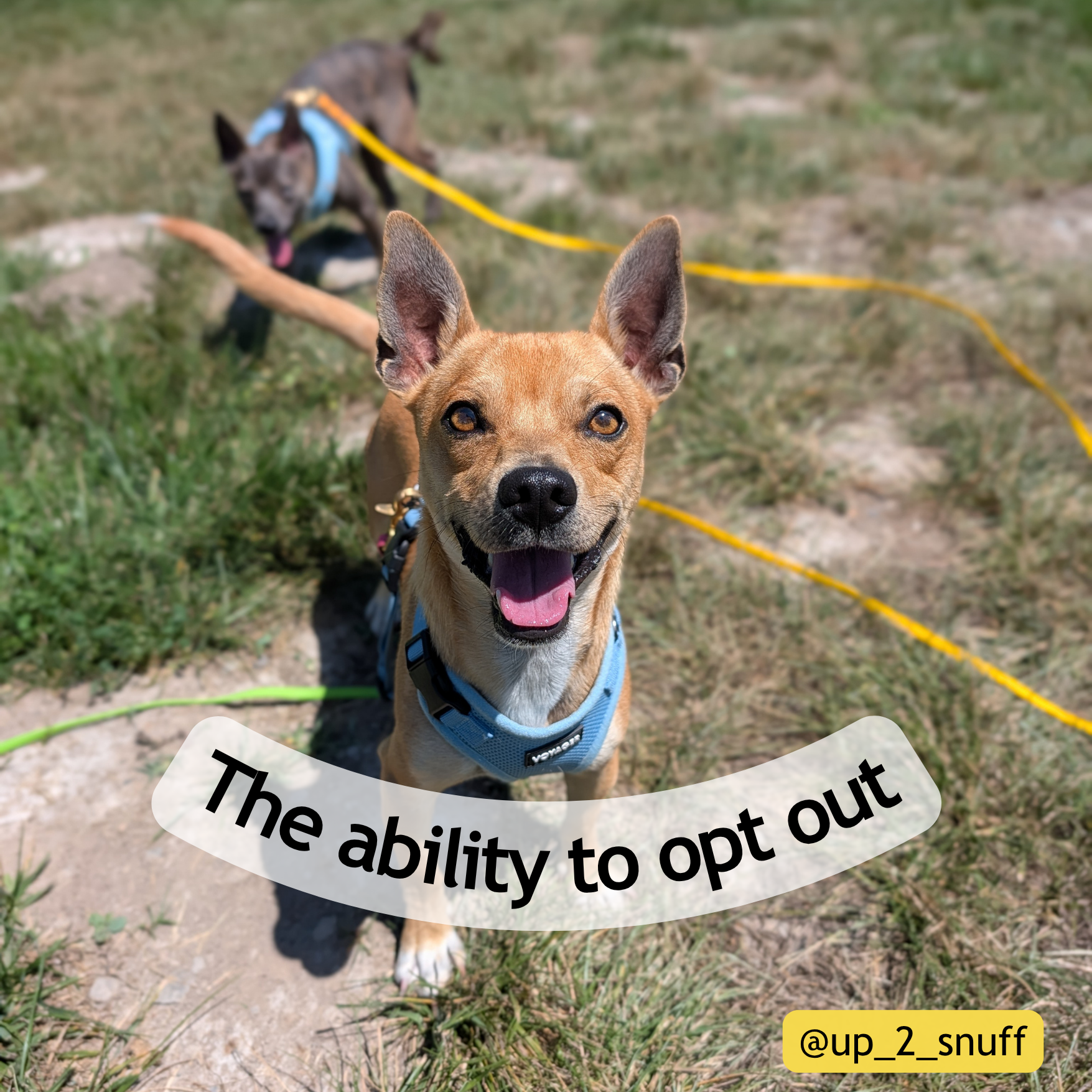
Play is not the end goal. The point of playgroup is to provide enriching experiences that lower stress for dogs in shelter care. Dogs are more than welcome to say “no” to this. Skilled handlers should constantly be reading body language and communicating to their fellow handlers if a dog is showing signs of stress, avoidance, or exit seeking.
The ability to opt-out is not only crucial for facilitating healthy interactions but is a valuable skill in and of itself. We really want dogs to choose flight over fight. We want them to choose to leave playgroup rather than use aggression to make the other dog go away. Respect the “no”!
Providing other opportunities to access reinforcement besides interacting with the other dog will help encourage this choice. Pools, agility equipment, and even handlers themselves can be stations that a dog engages with as their way of saying “I’m not keen on playing right now”. There are plenty of other ways to engage with dogs and provide enrichment outside of playgroup: clicker training, sniffy walks, nosework, ACE freework, even just hanging out in someone’s office for a few hours for peace and quiet, etc.
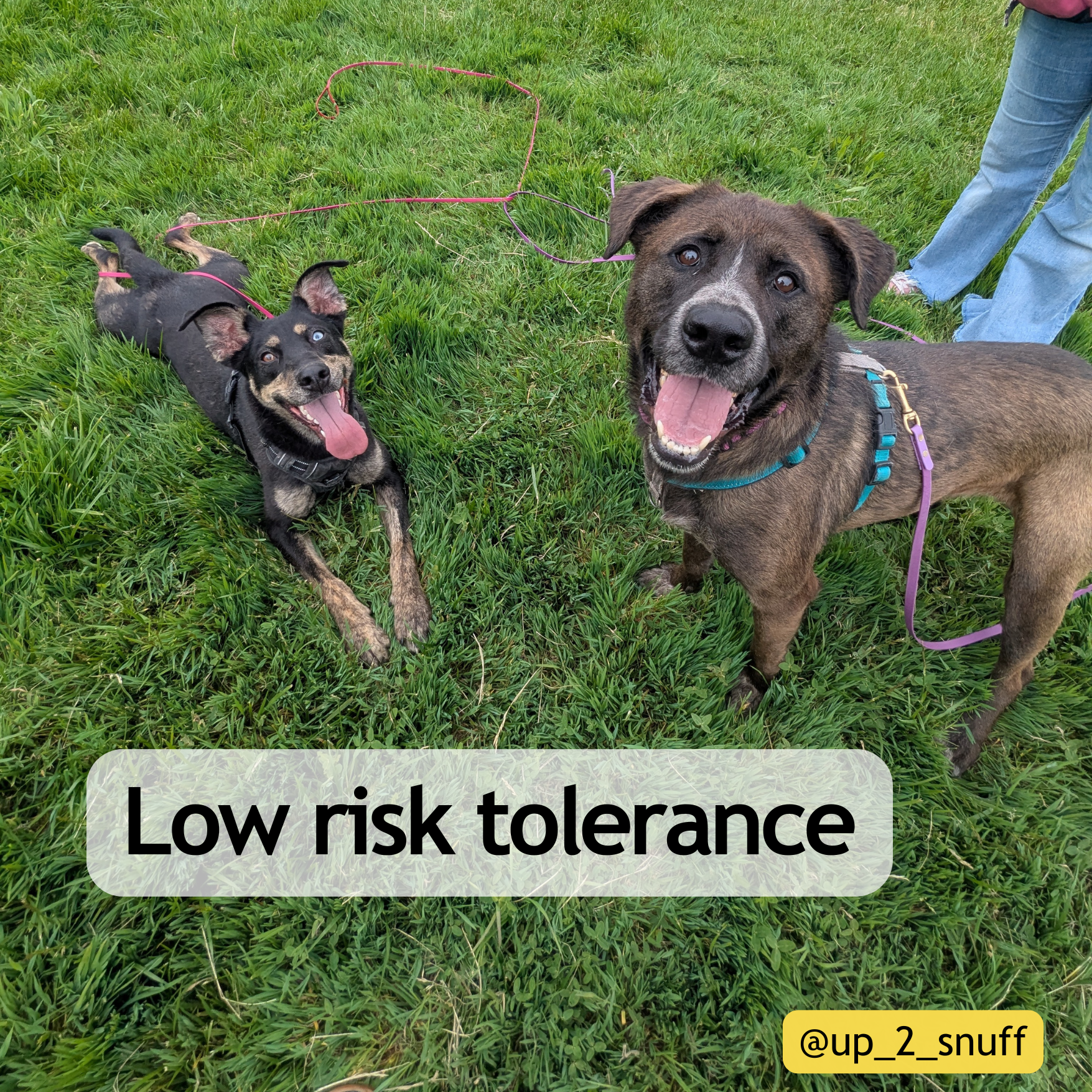
Low risk tolerance
In summation, I have low tolerance for risk in my playgroups and in my shelter work in general. The fallout from risky practices is real. You may not see it in the shelter, but it’s there whether you can read the signs or not. Large unmanaged playgroups may allow shelter staff and volunteers a sense of success, ease, and personal enjoyment, but this is an outsourcing of work/care to future adopters, and an antithesis to responsible community-minded sheltering. Living in a shelter is hard enough. Let’s at least keep playtime fun and stress-free. Our dogs just need to be humble, and willing to learn and grow.